Why We Put the K-Sign Letter Shell 3D Printer Under the Microscope
Signage fabricators and channel letter producers in the Philippines face a consistent production challenge: creating dimensionally accurate, high-quality letter shells fast enough to meet commercial signage lead times. Traditionally, channel letter shells are bent from metal or cut from acrylic � both slow, labor-intensive processes. When Kelin Philippines brought in the K-Sign Letter Shell 3D Printer, we committed to a full hands-on evaluation before recommending it as a production solution.
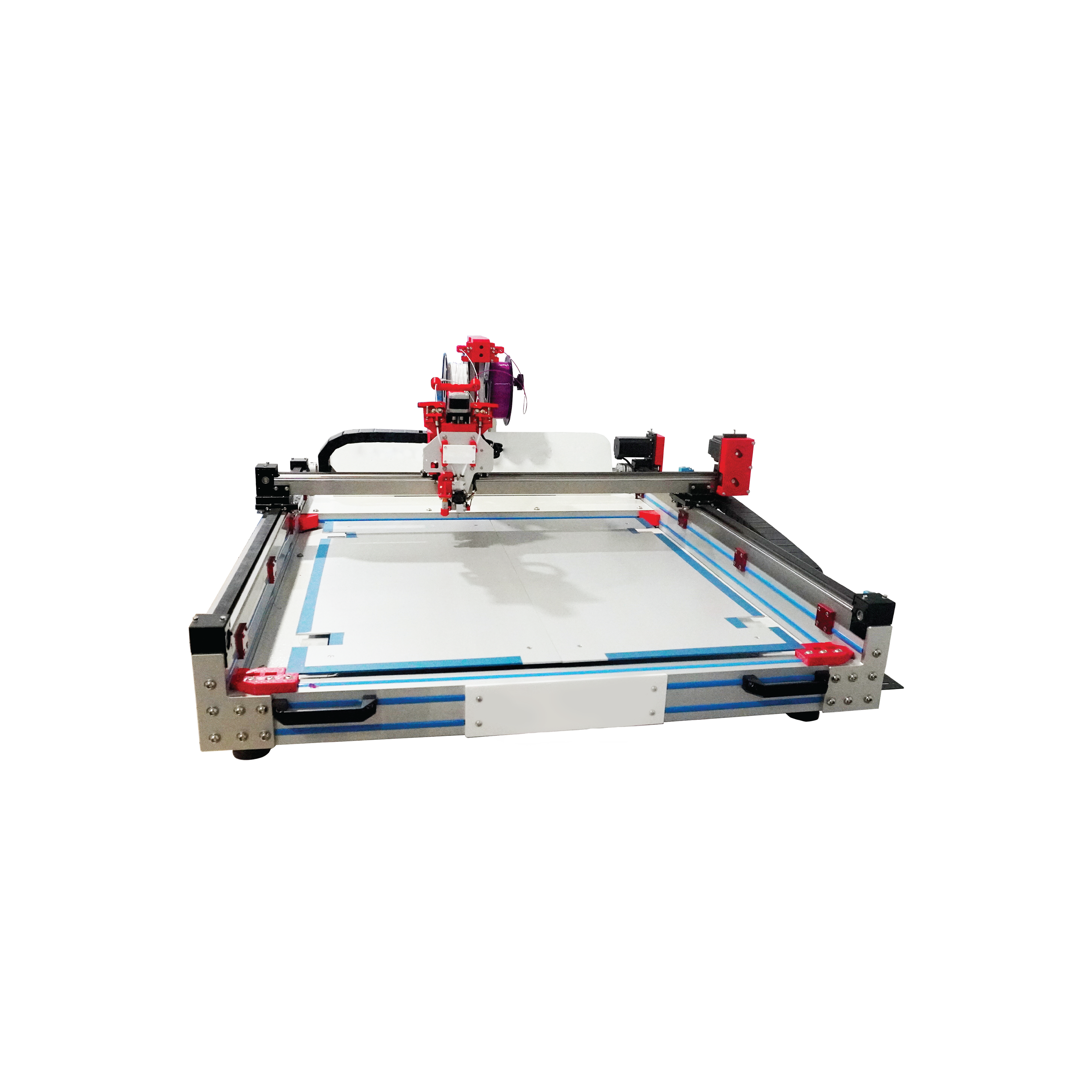
The K-Sign is positioned as a purpose-built 3D printer for letter shell and 3D signage component production. The headline feature is Smart Auto-Leveling with Database � a system that automatically stores platform configurations so the bed never needs re-leveling between jobs, eliminating one of the most time-consuming setup tasks in FDM 3D printing. Backed by a running speed of up to 700 mm/s, an integrated Z-axis for smooth material feeding, and an Auto Color Change system for two-color printing, this machine is built for consistent, high-volume production rather than prototyping.
We ran the K-Sign through real production jobs � channel letter shells, dimensional block letters, backlit letter components, 3D logo structures, and multi-color signage pieces � across extended production shifts. Here is what we found.
Technical Specifications: What You Actually Get
The K-Sign Letter Shell 3D Printer is built around PLMA filament (1.75mm diameter) with a 0.8mm nozzle optimized for the wall thickness requirements of channel letter shells and dimensional signage components. The 100�m layer thickness delivers smooth surface quality on letter side walls without requiring post-processing. The Daniu-Box SFS MX 3.2 software runs on Windows 10 and handles print job management, speed tuning, and the Smart Auto-Leveling database.
| Specification | Detail |
|---|---|
| Printerhead | 1 PC |
| Nozzle Size | 0.8mm |
| Layer Thickness | 100�m |
| Filament | PLMA |
| Screen LCD | 70mm � 50mm |
| Software | Daniu-Box SFS MX 3.2 |
| Voltage | 110V/220V / 50�60Hz |
| Power | 2.2�6.2A / 350�440W |
| Speed | Print 80mm�110mm/s | Run 700mm/s |
| Accuracy | Crankle �0.03/300mm | Straightness �0.03/300mm |
| Material Diameter | 1.75mm |
| System | Windows 10 |
Print Speed vs. Run Speed: The K-Sign distinguishes between print speed (80�110 mm/s � the actual extrusion head speed during active printing) and run speed (700 mm/s � the travel speed when moving between print segments). This distinction matters in production: the 700 mm/s run speed minimises non-productive travel time, keeping actual print cycle times low even though the extrusion speed is set for quality output.
Real-World Print Performance: Our Honest Numbers
Speed figures on a spec sheet are always optimistic. During our extended evaluation, we ran the K-Sign through continuous production shifts printing channel letter shells, block letter components, and multi-color 3D dimensional logos � measuring actual sustained throughput and surface quality, not peak figures under controlled lab conditions.
Channel Letter Shell Production
On standard channel letter shell printing with PLMA filament at 100�m layer thickness, the K-Sign delivered consistent wall quality across extended production runs. The Smart Auto-Leveling with Database system proved its value immediately: once the bed level was stored on day one, subsequent jobs launched without a single manual re-leveling cycle across the entire test period � directly recovering the 5�10 minutes per job that conventional FDM machines demand before every print.
Multi-Color Two-Tone Dimensional Letters
On two-color letter shells using the Auto Color Change system, transitions were clean and the 2-in-1-out mechanism handled color switching without leakage between colors across a 50-piece test run. The fast stable switching mechanism produced sharp color demarcation lines on dimensional letter faces � critical for two-tone signage where color bleed at the transition is visible on the finished installed sign.
Large Format Block Letters and Logo Structures
On larger 3D logo structures and block letter prints, the ultra-flat printing platform delivered consistent first-layer adhesion across the full bed width. No warping or lifting was observed at the letter base corners � a common failure mode on large-footprint prints on machines with less-flat beds. The filament sensor triggered correctly on two filament runout events during our testing, pausing the print and allowing successful filament reload without print failure.
Pro tip: Take full advantage of the Smart Auto-Leveling database by storing separate bed profiles for each material and temperature combination you run regularly. When switching between standard PLMA letter shell jobs and any specialty filament variants, loading the saved profile takes seconds and eliminates the need for any manual bed adjustment between material changes.
Four Engineering Details That Set the K-Sign Letter Shell 3D Printer Apart
The K-Sign's competitive advantage is not just its speed � it is the production-focused feature set that makes industrial-grade 3D printing viable for high-volume signage fabrication workflows.
Smart Auto-Leveling with Database
The K-Sign's headline feature automatically stores platform configurations, eliminating the need for re-leveling between print jobs. Conventional FDM printers require manual bed leveling before every production run � a 5�10 minute task that compounds across a multi-job production day. The database system saves leveling configurations per material profile and recalls them instantly at job start, streamlining workflow, reducing manual effort, and ensuring consistent, high-volume output. For production environments running multiple daily jobs, this single feature can recover 30�60 minutes of productive print time per shift.
Integrated Z-Axis
High precision and stability in the Z-axis drive mechanism produces smooth, low-failure material feeding � critical for maintaining consistent layer adhesion across tall letter shells and deep 3D dimensional components. On standard FDM machines, Z-axis binding or micro-stuttering causes visible layer lines on the sides of tall prints. The K-Sign's integrated Z-axis design eliminates these artifacts, producing letter shells with smooth, even side walls that require minimal post-processing before painting or finishing.
Filament Sensor with Infrared Auto-Pause
An infrared sensor monitors filament feed continuously and auto-pauses the print immediately on material break or filament outage � before the print head continues moving and ruins the partially printed piece. Without a filament sensor, an undetected filament jam or runout causes the print head to continue its path on air, producing a ruined part that cannot be recovered. The K-Sign's sensor system pauses production at the exact point of interruption, allowing the operator to reload filament and resume the print without loss � critical for large letter shell jobs where the cost of a failed print is significant.
Auto Color Change (2-in-1-out)
The fast, stable 2-in-1-out Auto Color Change system enables two-color printing without manual filament swaps, tool changes, or print interruptions � making two-tone channel letter production fully automated. The system prevents leakage between color transitions, producing clean color demarcation on letter faces and sides. For signage operations producing dual-color dimensional letters � such as white letter shells with colored face caps or logo components with two-tone bodies � this feature eliminates the manual post-processing step of painting or applying vinyl to add the second color.
Who Should Buy the K-Sign Letter Shell 3D Printer?
The K-Sign is built for signage fabricators, channel letter producers, and 3D dimensional branding operations where letter quality, production consistency, and throughput are all active constraints. Here is where it makes the strongest business case:
The K-Sign is purpose-built for channel letter shell production � the hollow dimensional letter bodies used in illuminated storefront signage. Printing letter shells in PLMA eliminates the manual aluminum bending and welding process, significantly reducing fabrication labor per letter set. The Smart Auto-Leveling database means production runs launch quickly without per-job bed setup, and the 100�m layer thickness produces shell walls smooth enough for direct painting without heavy sanding.
The Auto Color Change system makes the K-Sign the right machine for two-tone dimensional letter production � a growing requirement for retail branding where letter bodies and face caps carry different colors. The 2-in-1-out mechanism handles color transitions without leakage or manual intervention, producing clean color separation on letter sides and faces that holds up at the final installed sign scale. For operations producing dual-color logo structures or branded 3D dimensional displays, this capability eliminates a post-processing step from every job.
Beyond letter shells, the K-Sign handles full 3D logo structures, dimensional brand marks, and display components used in retail fixtures, exhibition stands, and interior signage. The ultra-flat printing platform and integrated Z-axis produce consistent geometry across complex 3D shapes, while the filament sensor ensures long unattended print runs for large components complete without failure. Operations producing branded display fixtures and dimensional interior signage components will find the K-Sign's PLMA material output paints and finishes cleanly for professional display-quality results.
For traditional sign shops looking to modernize their channel letter production workflow, the K-Sign offers a direct migration path from metal bending to 3D printed shells without the capital investment of full CNC routing equipment. The Daniu-Box SFS MX 3.2 software on Windows 10 is straightforward for operators familiar with standard design-to-production workflows, and the Smart Auto-Leveling database makes daily production operation simple enough for non-specialist staff to run consistently across shifts.
Final Verdict: The Strengths and the Honest Limitations
After extensive evaluation across real signage production scenarios � channel letter shells, two-color dimensional letters, 3D logo structures, and display components � here is our balanced assessment of the K-Sign Letter Shell 3D Printer.
Strengths
- Smart Auto-Leveling with Database � stores bed configurations and eliminates re-leveling between jobs, recovering 30�60 minutes of productive time per shift
- 700 mm/s run speed with print speed of 80�110 mm/s for fast cycle times on channel letter production
- Integrated Z-axis delivers smooth, stable material feeding and consistent layer adhesion on tall letter shells
- Infrared filament sensor auto-pauses on material break or outage � prevents failed prints on long unattended runs
- Auto Color Change (2-in-1-out) enables two-tone letter shell production without manual filament swaps or print interruptions
- Ultra-flat printing platform provides perfectly level surface for consistent first-layer adhesion across the full bed width
- 100�m layer thickness produces smooth side walls on letter shells suitable for painting without heavy post-processing
- Supports 110V/220V / 50�60Hz � flexible electrical compatibility for Philippine production environments
- Available through Kelin Philippines with local technical support, training, and parts access
Limitations
- Single print head configuration � one active nozzle means two-color printing requires the Auto Color Change system; true simultaneous dual-material printing is not available
- Optimized for PLMA filament � operations requiring specialty filaments (flexible TPU, engineering-grade nylon, or carbon fiber composites) should verify material compatibility before specifying
- 0.8mm nozzle is fixed � fine-detail prints requiring sub-0.8mm feature resolution will exceed the machine's geometric capability
- Daniu-Box SFS MX 3.2 software requires Windows 10 � Mac or Linux-based design workflows require a Windows workstation for print job management