Overview: Protecting Your Printhead Investment
The printhead is the most expensive and sensitive component in any inkjet or wide-format printer. In Philippine print shops where machines run long hours in warm, humid conditions, ink drying on printhead nozzles, capping stations, and encoder strips is a constant maintenance challenge. Neglecting regular cleaning leads to clogged nozzles, banding in prints, encoder errors, and in severe cases, permanent printhead damage that can cost tens of thousands of pesos to repair or replace.
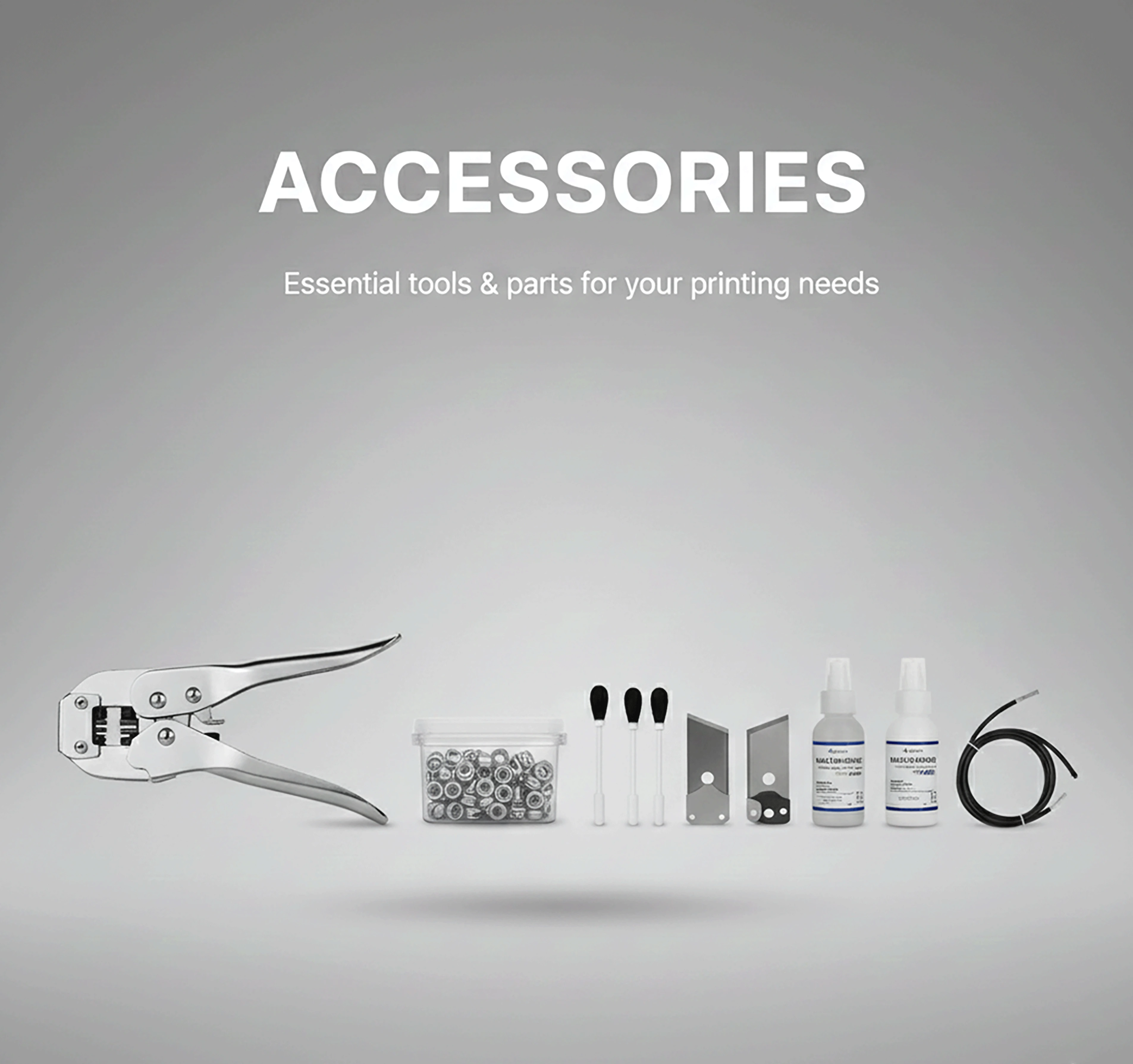
Lint-free printhead cleaning swabs are the right tool for safely cleaning these sensitive components. Unlike ordinary cotton swabs or tissues, lint-free swabs do not shed fibers that can clog nozzles or contaminate capping stations. They are made from non-woven polyester or similar lint-free materials that are solvent-compatible, meaning they can be used with cleaning solutions for eco-solvent, UV, sublimation, and DTF printers without degrading or releasing contaminants.
The high absorbency of these swabs allows them to pick up ink effectively in a single pass, reducing the number of strokes needed to clean a surface and minimizing the risk of spreading contamination. Their compact profile also allows access to tight spaces around the printhead carriage and capping station where larger wipers cannot reach.
Specifications
| Specification | Detail |
|---|---|
| Type | Lint-free cleaning swabs |
| Ink Compatibility | Solvent, eco-solvent, UV, sublimation, DTF inks |
| Residue | No residue — lint-free |
| Absorbency | High |
| Application Areas | Printhead cleaning, encoder strip, capping station, wiper blade |
| Material | Non-woven polyester (lint-free) |
| Solvent Compatibility | Yes — compatible with standard cleaning solutions |
How to Use Printhead Cleaning Swabs
Before cleaning any printer component, always turn off the printer and move the printhead carriage to the maintenance position as specified in your printer's manual. Never clean a printing printhead with a dry swab — always moisten the swab lightly with the appropriate cleaning solution for your ink type (eco-solvent cleaner for eco-solvent printers, IPA for UV or sublimation, etc.).
For printhead face cleaning, gently wipe the printhead nozzle plate in one direction only — never scrub back and forth, as this can force ink back into the nozzles or damage the delicate nozzle surface. Use a fresh swab for each stroke and discard used swabs immediately. For encoder strip cleaning, apply cleaner to the swab and wipe along the strip gently to remove ink mist and dust buildup that can cause encoder read errors and print positioning problems.
For capping station maintenance, remove excess accumulated ink from the cap using a swab moistened with the appropriate cleaning solution, working gently to avoid deforming the rubber cap that must seal against the printhead during capping. Clean the wiper blade similarly, removing accumulated ink and debris to ensure effective wiping action during the printer's automatic maintenance cycles.
Tip: Establish a regular printhead cleaning schedule rather than waiting for print quality problems to appear. In busy Philippine print shops, a weekly light cleaning of the capping station and wiper blade with lint-free swabs prevents the heavy ink buildup that leads to costly clogs and printhead damage.
Final Verdict
Printhead cleaning swabs are a low-cost maintenance investment that protects your most expensive printer components. Their lint-free construction, solvent compatibility, and high absorbency make them the safe, professional choice for all printer maintenance tasks. Regular use as part of a maintenance routine significantly extends printhead lifespan and reduces costly downtime.
Strengths
- Lint-free — no fiber contamination of printheads or nozzles
- Compatible with all major ink types including UV and solvent
- High absorbency removes ink effectively in fewer passes
- Slim profile accesses tight spaces around carriage components
- Protects printhead investment and extends lifespan
Limitations
- Single-use — must be discarded after each cleaning stroke
- Requires appropriate cleaning fluid — swabs alone are not sufficient
- Incorrect technique can still damage sensitive nozzle plates